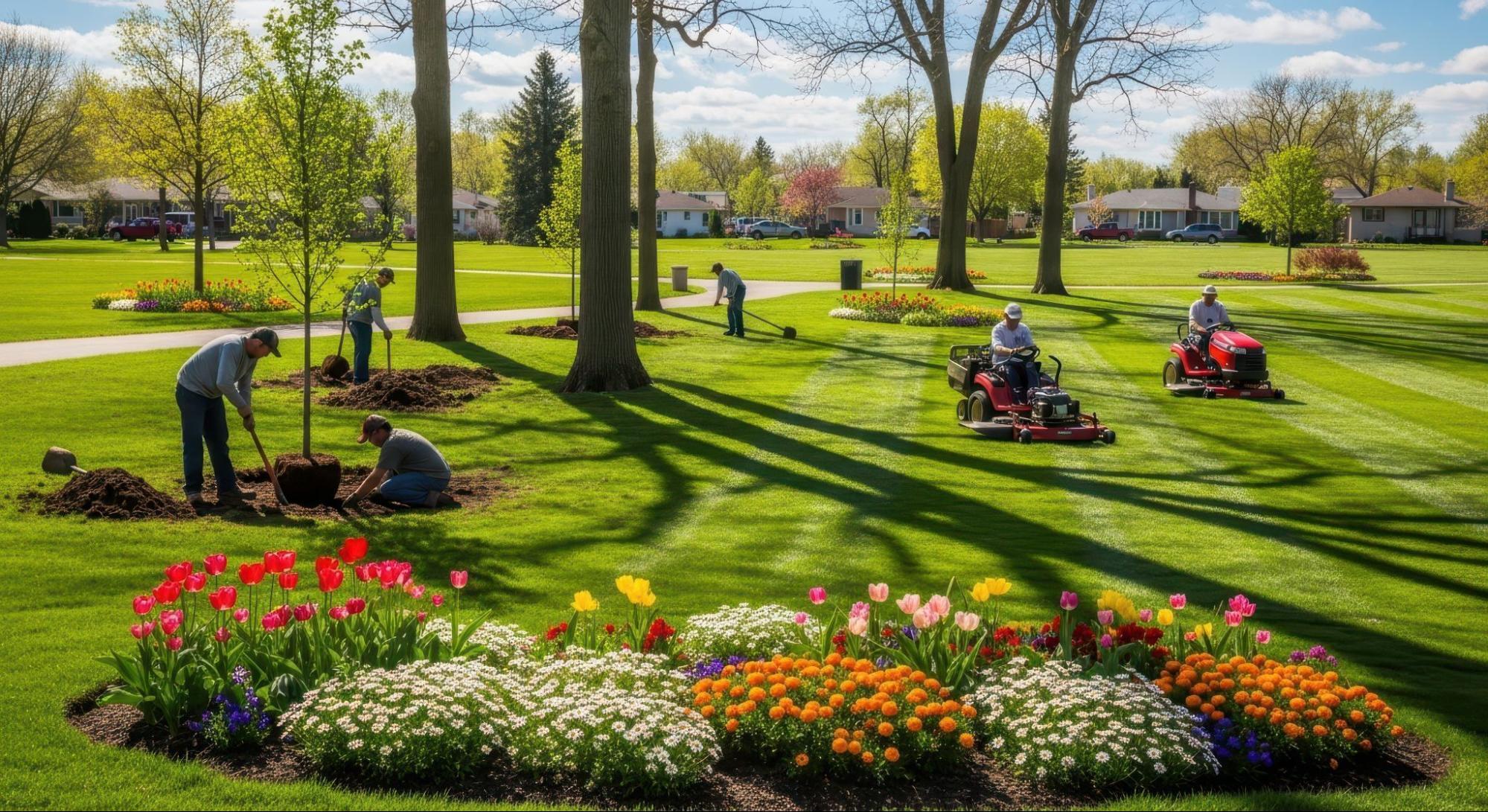
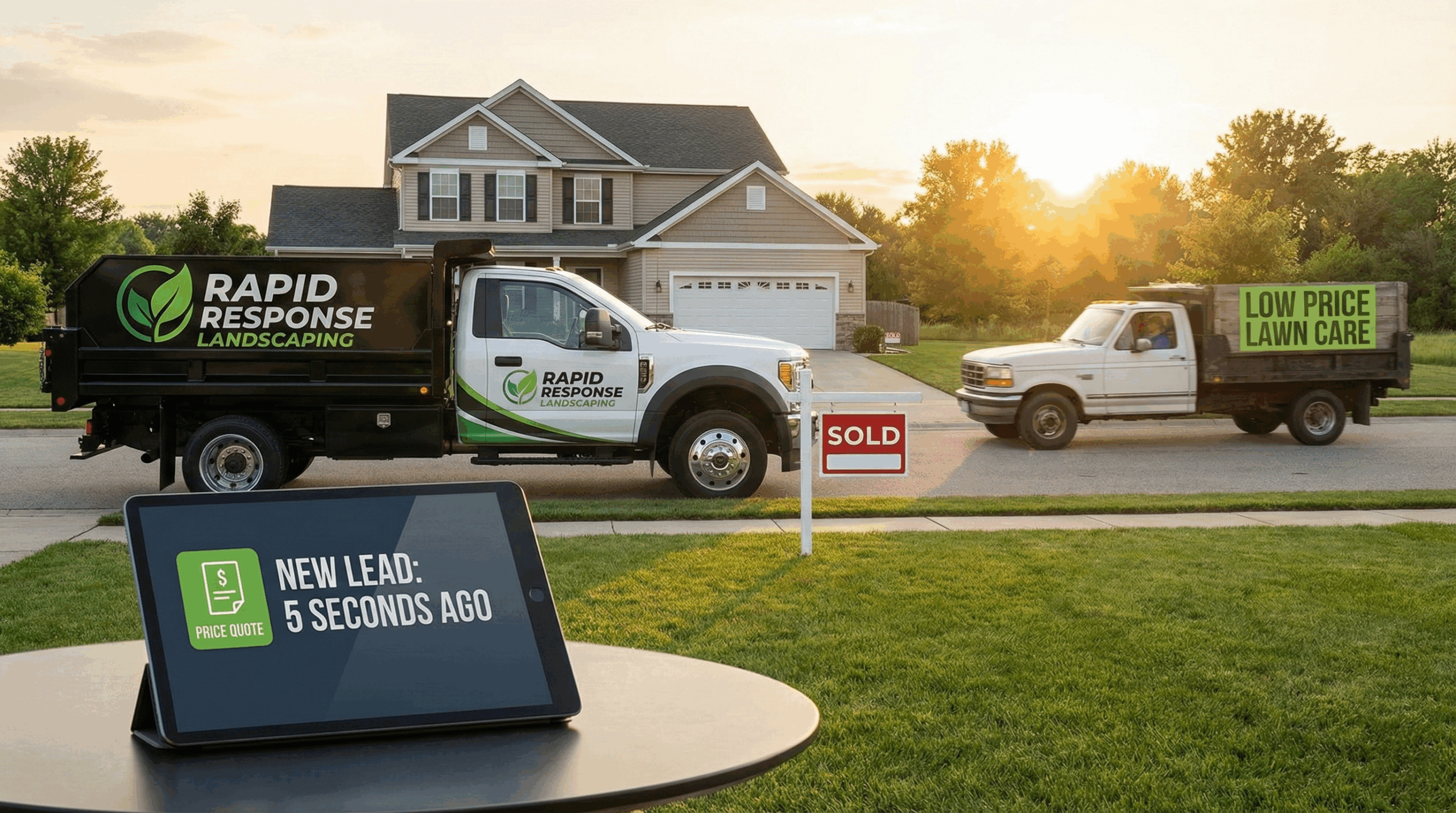

A homeowner decides on Monday that their yard needs spring cleanup. They Google “landscaping near me” and start calling companies.
By Tuesday, they’ve reached three of you. They’re getting quotes.
By Wednesday, one of you is booked and they’re hiring.
You’re still writing your estimate.
This is the landscaping lead problem nobody talks about. It’s not a long, complex sales cycle. It’s a fast, competitive sprint. And most landscape companies lose because they’re too slow.
The Real Landscaping Lead Problem
Landscaping decisions happen fast. Way faster than most business owners realize.
A homeowner doesn’t spend weeks planning their spring cleanup. They decide on Monday and want it done by Friday. They don’t spend a month comparing hardscape contractors. They call three companies, get quotes, and pick one.
The timeline is short. Maybe 3 to 7 days from first inquiry to decision.
And during those 3 to 7 days, they’re comparing you against 2 to 3 other landscapers simultaneously. Not sequentially. Simultaneously.
So here’s what actually kills most landscape leads:
- You don’t respond fast enough. They call you Tuesday. You don’t call back until Wednesday afternoon. By then, they’ve already hired someone else.
- You’re not available when they want the work done. They need cleanup this Saturday. You’re booked. They move on.
- Your quote is unclear or confusing. It takes them 20 minutes to understand what you’re offering. Competitor’s quote was simple and clear. They pick the competitor.
- You don’t follow up during the decision window. They requested a quote Wednesday. You send it Thursday. They decide Friday morning without ever hearing from you again.
This isn’t about long-term nurturing. This is about speed, clarity, and staying visible during a 3 to 7 day decision window.
Most landscape companies lose 40-60% of leads not because the work is bad, but because they’re too slow during that critical window.
Why Speed Is Everything
Let’s talk about what actually matters to a homeowner who’s looking for a landscaper.
They’ve decided they want work done. They’re ready to hire. They’re looking for someone who:
- Answers the phone or calls back fast
- Understands what they want quickly
- Is available when they need the work done
- Gives them a clear quote they can understand
- Follows up so they don’t have to chase you
That’s it. They’re not comparing you based on your marketing sophistication or your social media presence. They’re comparing based on responsiveness and availability.
The landscaper who responds in 2 hours wins over the landscaper who responds in 24 hours. The landscaper who’s available next week wins over the landscaper who’s booked for three weeks.
Speed isn’t everything. It’s the only thing during those 3 to 7 days.
What Happens Without a System
Here’s what manual follow-up actually looks like:
- Monday: Homeowner calls. You’re in the field. They leave a voicemail.
- Tuesday morning: You get back to them. Good. But they already called two other companies who answered immediately.
- Tuesday afternoon: You go look at the yard. Nice. You say you’ll send a quote.
- Wednesday: You’re busy with another job. You don’t send the quote until evening.
- Thursday morning: They’ve already decided. They hired the other guy.
That’s the pattern. Not because you’re not good. Just because you were slower than someone else during a compressed decision window.
With a system, it looks different:
- Monday: Homeowner calls. Your system automatically sends them an estimate request form via text. They fill it out immediately.
- Monday evening: They get an automated response confirming receipt and telling them when you’ll follow up.
- Tuesday morning: You call them back personally (not a cold call—you’ve already communicated). You discuss availability and next steps.
- Tuesday afternoon: You send a clear quote via text.
- Wednesday morning: They respond with questions. You answer immediately.
- Wednesday afternoon: They book the job.
Same prospect. Different result. The difference was speed and clear communication at each step.
The Numbers (What This Actually Costs You)
Let’s be specific about what speed means for your bottom line.
Say you’re getting 20 inquiries per month.
Right now, about 50% of those become jobs (10 jobs per month). Average job: $2,500.
That’s $25,000 per month.
What’s happening to the other 50%? They’re hiring someone else. Why? Usually because you were too slow during that critical decision window.
Now, what if you improved your response speed and availability so that 65-70% of inquiries became jobs? That’s 13-14 jobs per month instead of 10.
3-4 additional jobs per month. At $2,500 average, that’s $7,500 to $10,000 per month in new revenue.
$90,000 to $120,000 per year.
From the same number of inquiries. Just by being faster.
For a larger company getting 40 inquiries per month, the math is even better. Improve from 50% to 65% close rate, and you’ve got 6-8 additional jobs per month. $150,000 to $200,000+ in additional annual revenue.
Why Automation Wins
Here’s where automation changes everything: it makes you fast automatically.
- You don’t have to remember to call back fast. Your system sends an immediate response when they inquire.
- You don’t have to send quotes manually. Your system can send a preliminary quote automatically based on the type of work.
- You don’t have to follow up to see if they have questions. Your system can follow up automatically asking if they need clarification.
- This doesn’t replace your personal touch. It layers underneath it. The system handles speed and consistency. You handle the personal conversation and the sale.
Here’s what automated speed looks like for a landscaper:
Instant Acknowledgment: Prospect fills out your form. Within 2 minutes, they get an automated response confirming receipt and letting them know when you’ll call.
Quick Information Gathering: That response asks a few key questions: When do you need the work done? What’s your budget range? What’s the main concern? This helps you prioritize and respond with the most relevant information.
Fast Quote Delivery: You respond personally within 24 hours with a clear quote and availability.
Persistent Follow-Up: If they don’t respond, the system follows up automatically (not nagging—just once or twice asking if they have questions).
Seasonal Reminders: For maintenance clients, the system reminds them when seasonal services are coming up (spring cleanup reminder in March, fall prep in August).
The beauty of this? You’re fast without working harder. Your team isn’t staying late responding to inquiries. The system handles first-response speed. Your team handles the personal relationship and closing.
How to Get Started This Week
You don’t need a complex system. You need speed.
- Day 1: Set up your phone so prospects can text you. Make sure someone responds to texts within 2 hours during business hours.
- Day 2: Create an automatic response to your website form that goes out immediately. “Thanks for reaching out. Someone from our team will call you within 24 hours with availability and next steps.”
- Day 3: Create a simple text or email response template that you send when prospects inquire. Keep it short: “Hi Sarah, thanks for reaching out about spring cleanup. I can do Tuesday at 2pm or Thursday at 10am to walk the property. Does one of those work?”
- Day 4: Set a reminder to follow up with any prospect who hasn’t responded within 48 hours. One simple message: “Just checking in—do you have any questions about the quote I sent?”
That’s it. Four things. Doubles your responsiveness. Costs nothing. Takes a few hours total.
For more comprehensive guidance on automating landscaping marketing, check out how successful green industry companies handle lead follow-up. Many use simple systems that focus on speed and availability.